EN
 DE
 Timo K.Shipping
8 minutes
The car is the most visible spot for a sticker, and also the trickiest: paint, resale value, and in rare cases even your MOT are on the line. What's actually a problem is less than most people think — and it's not what you'd expect.
The panels, one by one
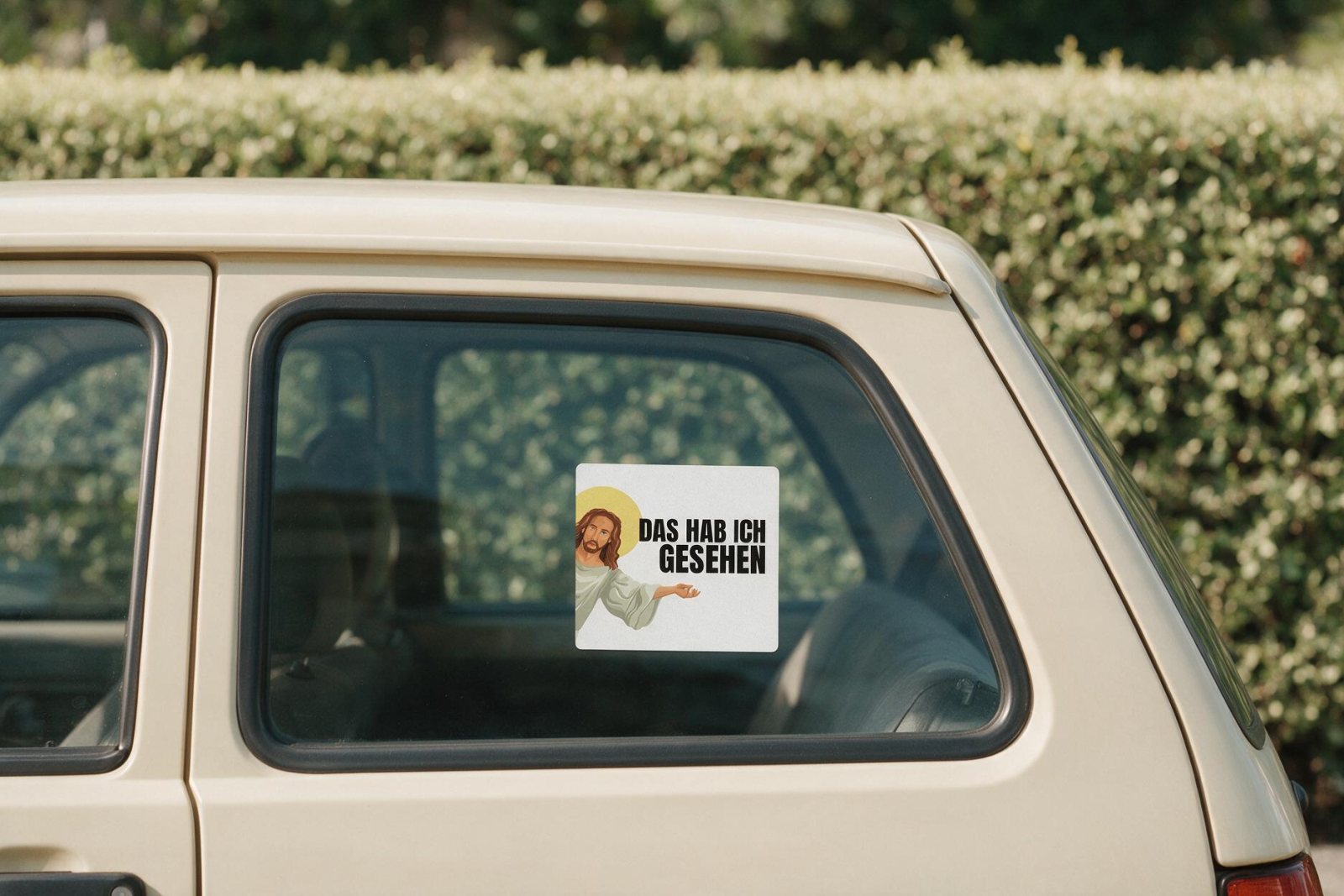
The best spot there is. Glass doesn't care, and rear visibility is allowed to be a bit restricted as long as both wing mirrors are in place. Stuck on from the outside, it's easier to peel off later; from the inside, it's better protected from the weather.
The tailgate and wings are vertical panels that get less UV. The bonnet and roof technically work too, but they take the most sun — over 40°C in summer — so expect roughly half the lifespan there.
Plastic, often slightly textured. Sticks well, but needs especially thorough degreasing: this is where most road grime and tyre shine end up — and silicone is any adhesive's natural enemy.
Number plate: nothing on it, nothing over it, not even partially. Windscreen field of view: keep it clear (that's a legal requirement in most countries). Over sensors and cameras — rain sensor, driver-assist camera, radar behind the badge, parking sensors — a sticker can genuinely cause malfunctions.
What your MOT test actually cares about
A lot less than the legend suggests. The test is about road safety, not taste. A sticker only gets flagged if it:
- restricts the driver's field of view,
- covers a light unit (brake light, indicator, reflector),
- obscures the number plate, or
- forms a sharp, protruding edge.
The content doesn't matter to the tester at all. Whether someone else has an opinion about the content is a different story.
Sticking it on a car: what's different from everywhere else
The normal application guide still applies, with three extra points:
- Wax and polish have to go. Freshly sealed paint is the smoothest surface on the whole car — and the worst one for adhesive. Isopropanol strips the sealant right there, and that's the point.
- Don't stick it on in direct sun. A dark panel at midday can hit 60°C. The adhesive goes soft instantly and you can't reposition it any more.
- Avoid seams and edges. Stretched over a body seam, vinyl pulls back over time. Stay within one flat panel.

On size
Our standard size of about 7.4 cm is on the small side for a rear window: the driver behind you can only read it from a few metres away. For a wing, fuel cap or bumper, though, it's exactly right. If a design really needs to work from a distance, one of the larger sizes is worth it — paired with the hinge method.
Vertical outlasts horizontal. Glass is more forgiving than paint. And anything you don't press down at the edge will lift back up.
 Car
 Jokes
 Memes
 Outdoor