EN
 DE
 Jana R.Customer Service · answers this question every day
7 minutes
The most common message in our inbox isn't "which size fits" — it's "how do I get this off again". Usually it's the employer's laptop, the car before it's sold, or the fridge before moving out. The good news: almost every sticker comes off without a trace. All it takes is heat and patience, not force.
Why heat is the only thing that actually helps
Pressure-sensitive adhesive isn't glue in the classic sense — it never cures, it stays permanently tacky. At room temperature it's tacky enough to hold. Warm it up to 50–60°C and it turns noticeably softer, releasing the surface almost on its own.
Pull it off cold instead and you're fighting the adhesive at full strength. One of two things happens: the vinyl tears into strips, or it comes off and leaves all the adhesive behind on the surface. Either way is a lot more work afterward.
The four steps
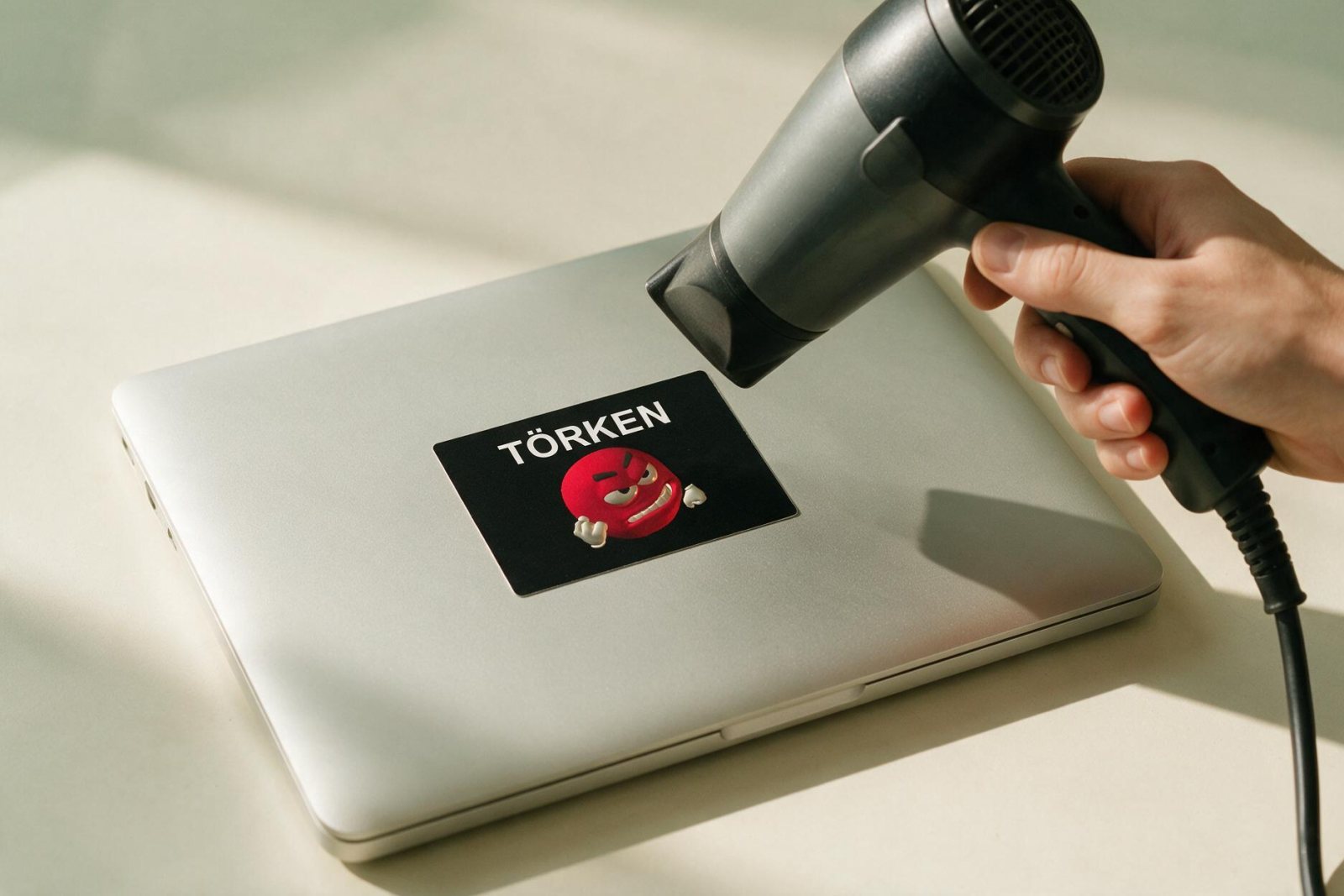 Step 1 — Warm up
Hairdryer, medium setting, 15 cm away, 30 to 60 seconds moving in
circles over the whole area. The sticker should feel warm
afterward, not hot. If it's hot, the dryer's too close.
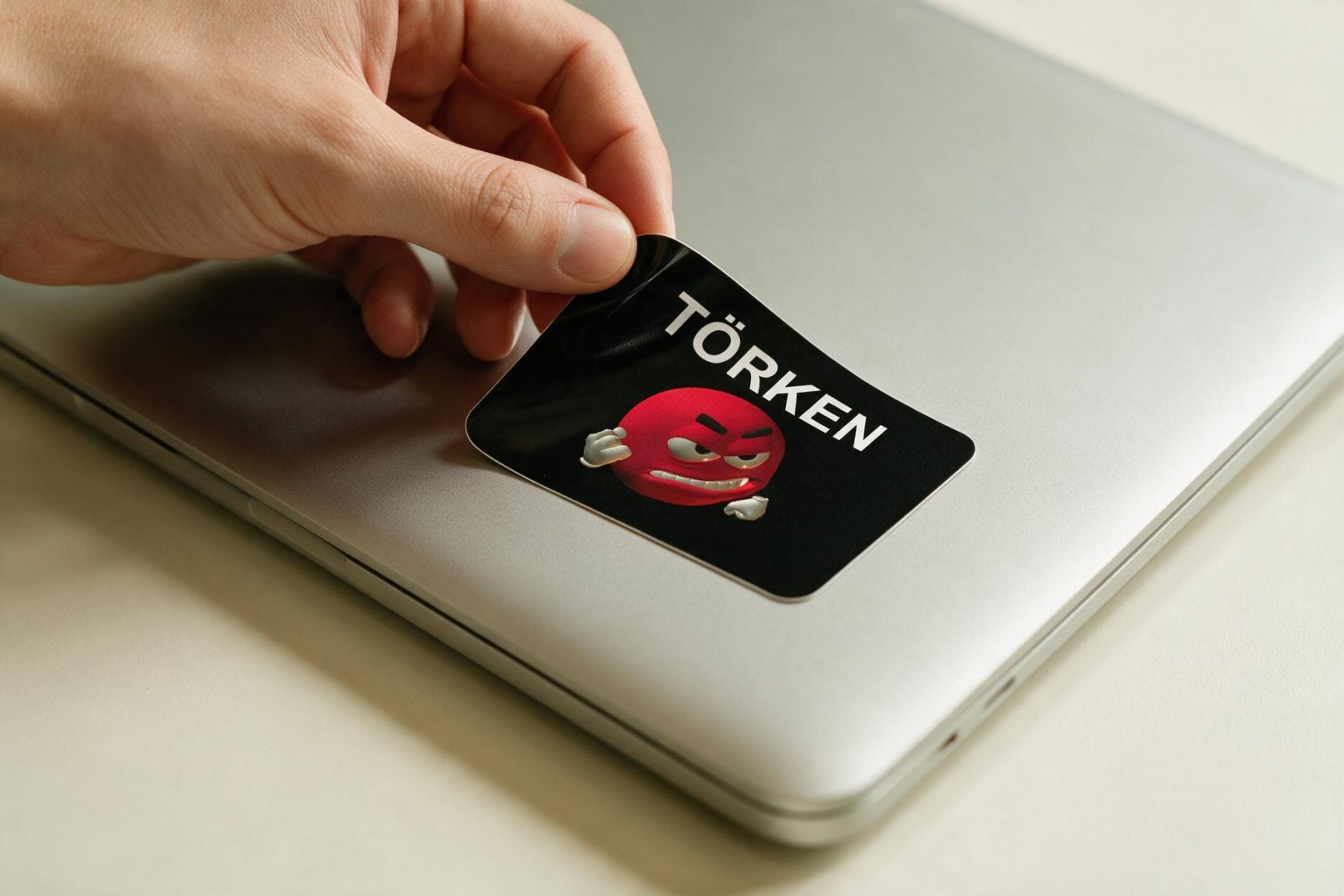 Step 2 — Lift a corner
Use your fingernail or the edge of a plastic card to lift one
corner. No knife, no screwdriver, no cutter — a scratch lasts
longer than any sticker.
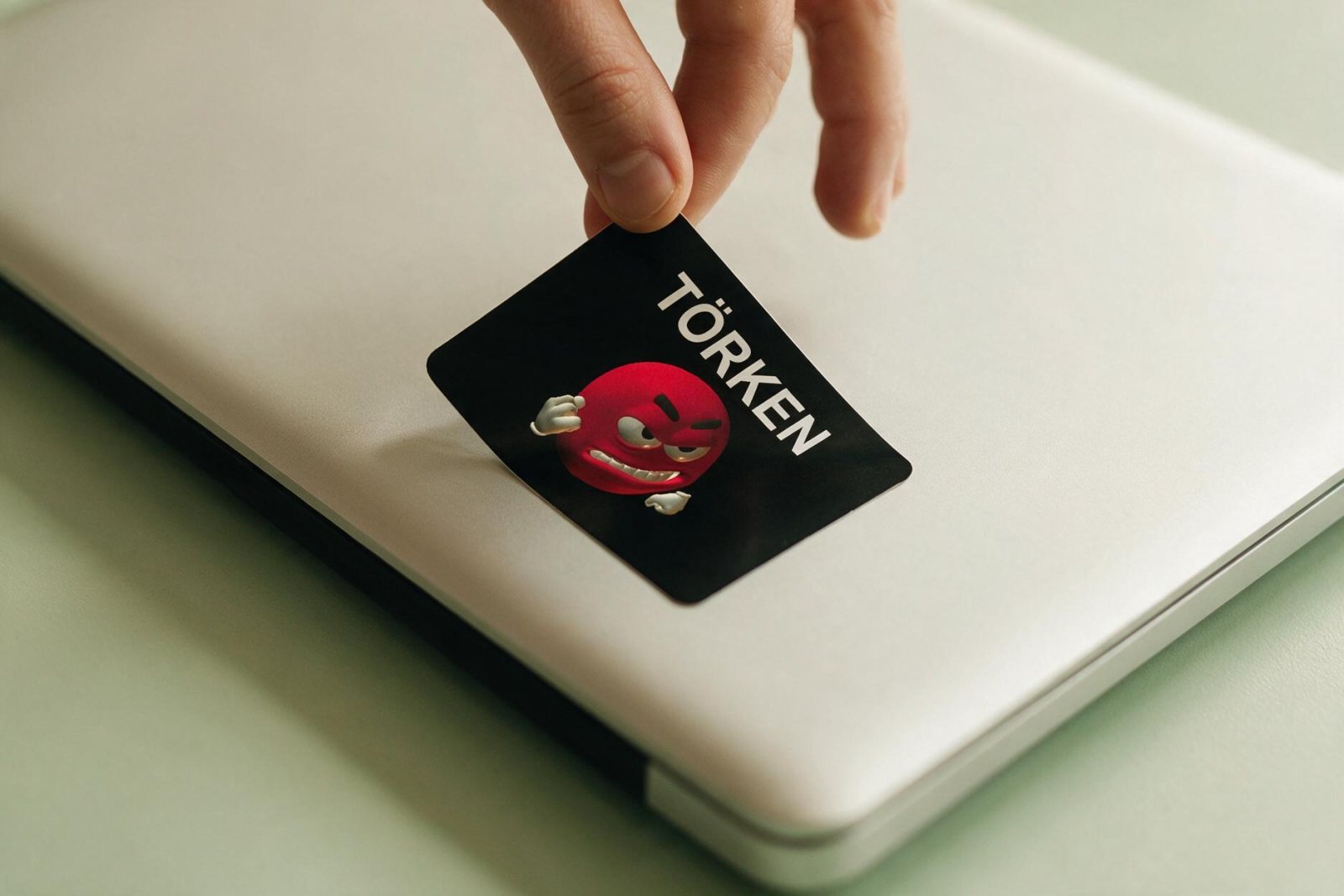 Step 3 — Peel flat
Pull at a very shallow angle, almost parallel to the surface, and
slowly. Adhesive behaves like chewing gum: yanked, it
tears; pulled slowly, it lets go. If it gets stiff, warm it again.
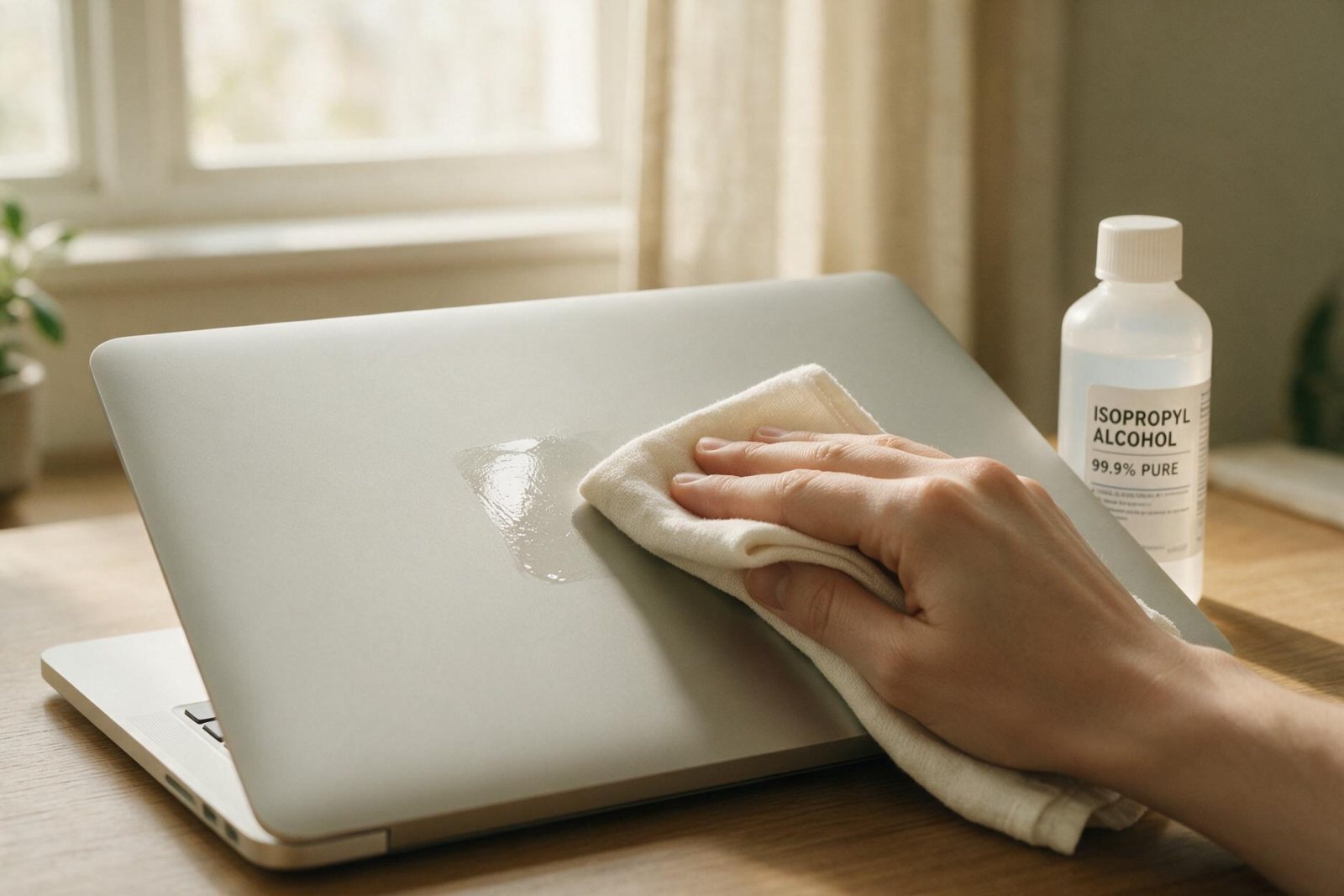 Step 4 — Clean up the residue
Isopropanol on a cloth, let it sit for two minutes, then wipe in
one direction. Don't scrub — that just spreads the adhesive
around and leaves the surface dull.
The shallow angle, in detail
Pull a sticker straight up and the entire force lands on one hair-thin line — that's exactly where the vinyl tears. Pull flat and the force spreads across a much wider area, letting the adhesive release as a whole. The difference between 90° and 20° is the difference between five minutes and half an hour.

The adhesive residue afterward
Often a slightly sticky haze is left behind, especially if the sticker sat there for years. That's normal and takes two minutes to sort out — as long as you use the right product.
| Product | Dissolves adhesive | Surface-safe | Note |
|---|---|---|---|
| Isopropanol 70% | yes | yes | First choice on glass, metal, paint, laptop shells |
| Orange oil cleaner | yes | yes | Smells nicer, takes longer, leaves an oily film |
| Cooking oil | yes | yes | The household trick. Wash with washing-up liquid afterward. |
| Acetone / nail polish remover | yes | no | Attacks paint and most plastics instantly |
| Abrasive cleaner, scouring pad | no | no | Turns a sticky patch into a dull one |
Surface by surface
The easy case. Glass doesn't mind heat or solvents. You can even use a razor blade scraper held flat here — on plain window glass, not on coated or tinted glass.
Modern clear coat is tough but not invincible. Just dry it with a hairdryer, peel flat, follow up with isopropanol, then wax or seal the spot afterward. Where the sticker sat, the paint has faded less than the surrounding area — on older cars that shadow stays visible no matter what you do.
Aluminium unibody: no problem. Coated plastic shells with a soft-touch surface: very risky — isopropanol can sometimes take the coating off with it. Test first. Go easy with liquid near vents and ports.
Laminated chipboard (most of what comes from the Swedish furniture chain) doesn't like heat — the laminate bubbles up. Work without a hairdryer here, and use patience and oil instead. Solid wood with an oiled or waxed finish: dissolve the residue with oil, then re-oil afterward.
Things better left undone
- Scrubbing it off with your fingernail. That just spreads the adhesive around and leaves the surface dull.
- Reaching for a cutter or kitchen knife. A scratch lasts longer than any sticker.
- Cold water on a warmed-up surface. On glass, in extreme cases, this can cause stress cracks.
- Working at 3°C in the garage. The adhesive won't soften — you'll just tear the vinyl.
What matters is the surface, not the sticker: a design from the laptop stickers comes off a laptop lid just as cleanly as a design from the car stickers comes off sheet metal. Both sit on the same removable adhesive.
Time is the tool. Plan for ten minutes and you'll need five. Plan for two and you'll need forty — plus a scratch.