EN
 DE
 Sina W.How-To & Practice · sticks everything here first
6 minutes
We get an email with a photo almost every week: a lovely sticker, and underneath it an air bubble the size of a two-euro coin. Almost always the bubble didn't happen while sticking it on — it happened in the ten seconds before, on the surface. This guide needs four steps, no tools, and about two minutes.
Why bother at all
A sticker doesn't hold like a magnet that either grips or doesn't. The adhesive builds its bond over hours: it flows into the tiny irregularities of the surface and locks into them. Anything sitting in the way — dust, grease from your fingers, traces of polish or washing-up liquid — blocks exactly that interlocking at exactly that spot. That's where the bubble ends up later.
Which is why prep isn't the boring bit before the real sticking. Prep is the real sticking.
The four steps
Click through — each step takes less time in real life than it takes to read this line.
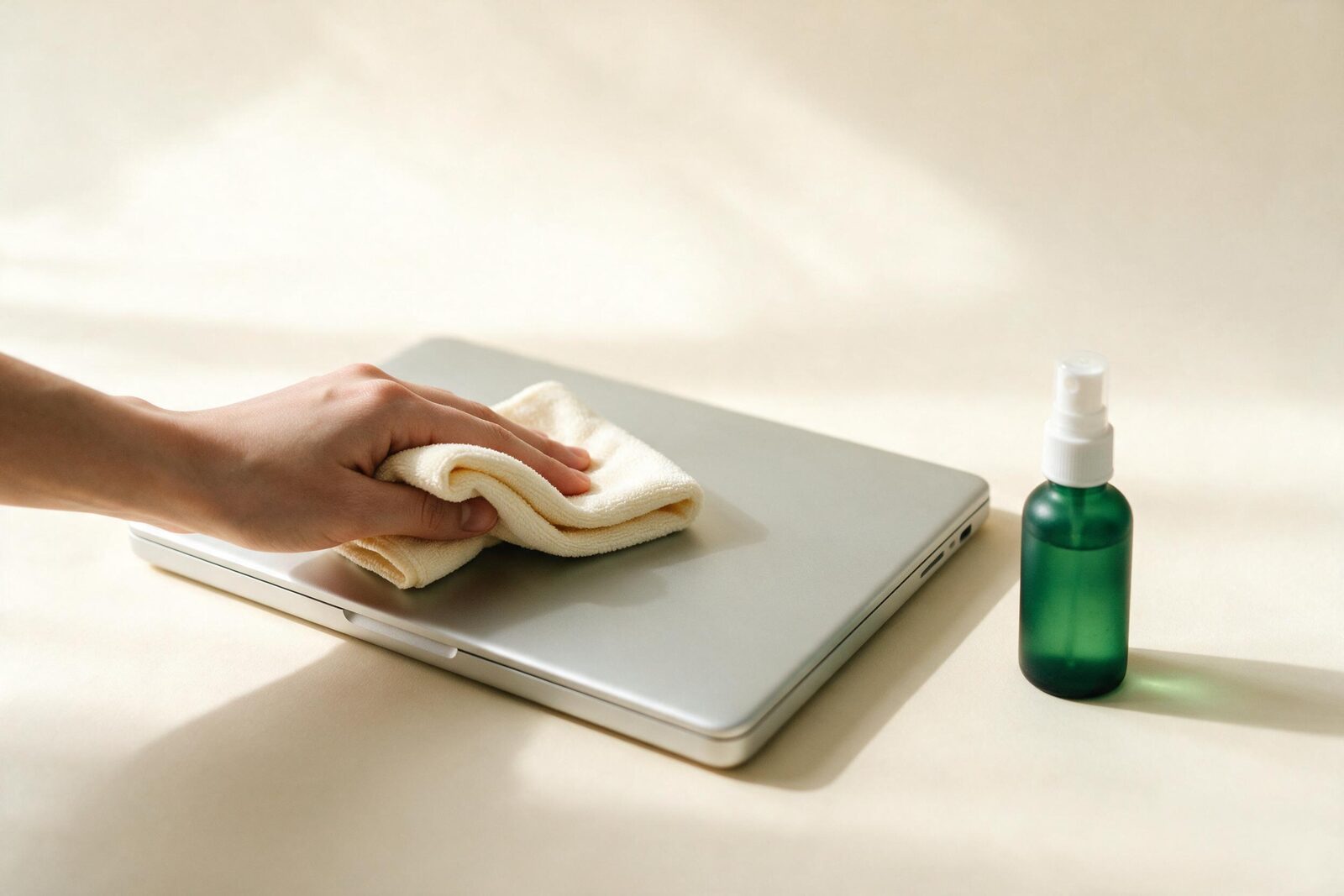 Step 1 — Clean
Isopropanol (70%) on a lint-free cloth, wipe the surface, let it
dry for one minute. No glass cleaner, no washing-up
liquid: both leave a film the adhesive slides on.
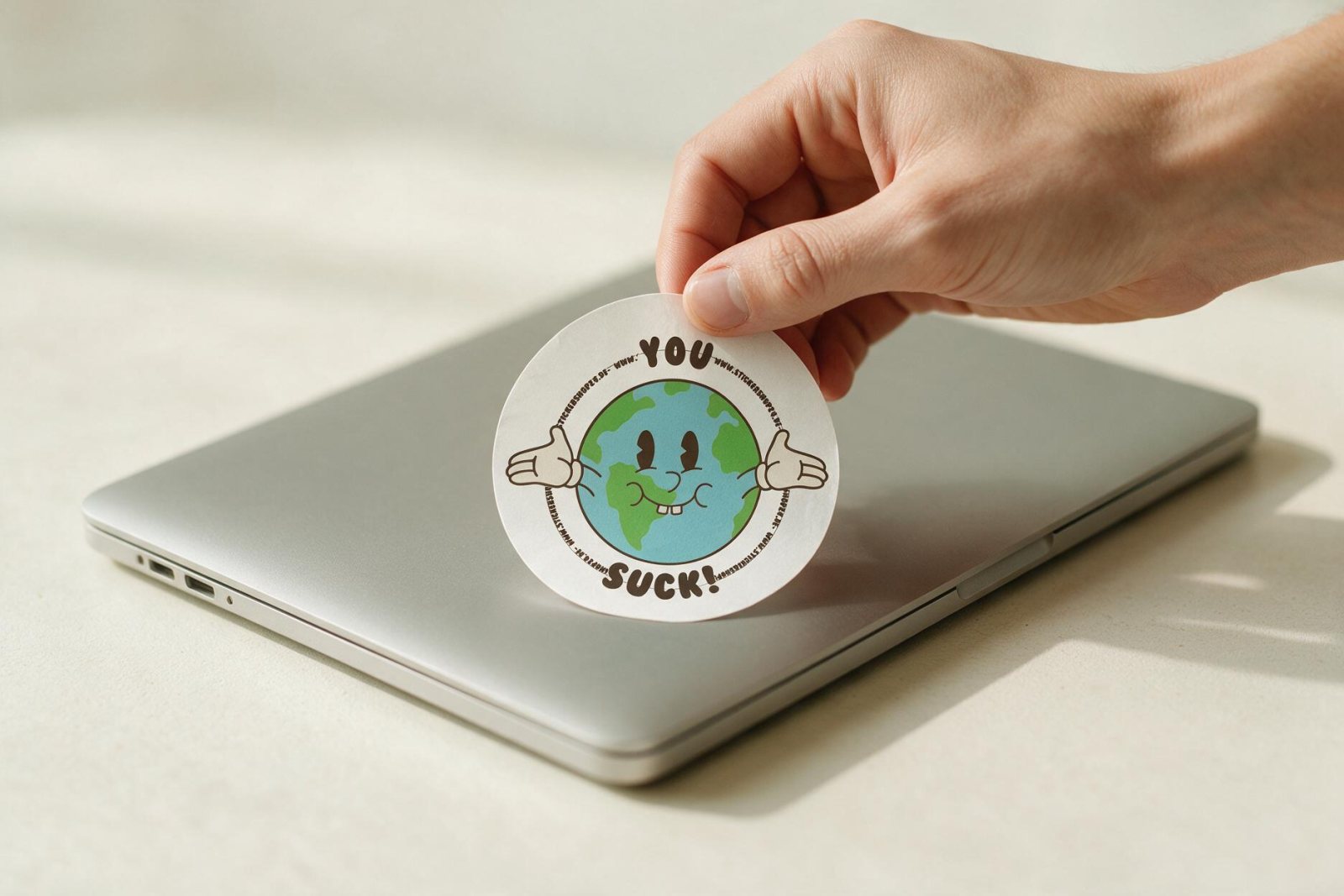 Step 2 — Align
Lay the sticker down together with its backing paper and fix the
top edge with a strip of tape. Now you can step back, take a look,
leave it hanging there for a day even — nothing will shift.
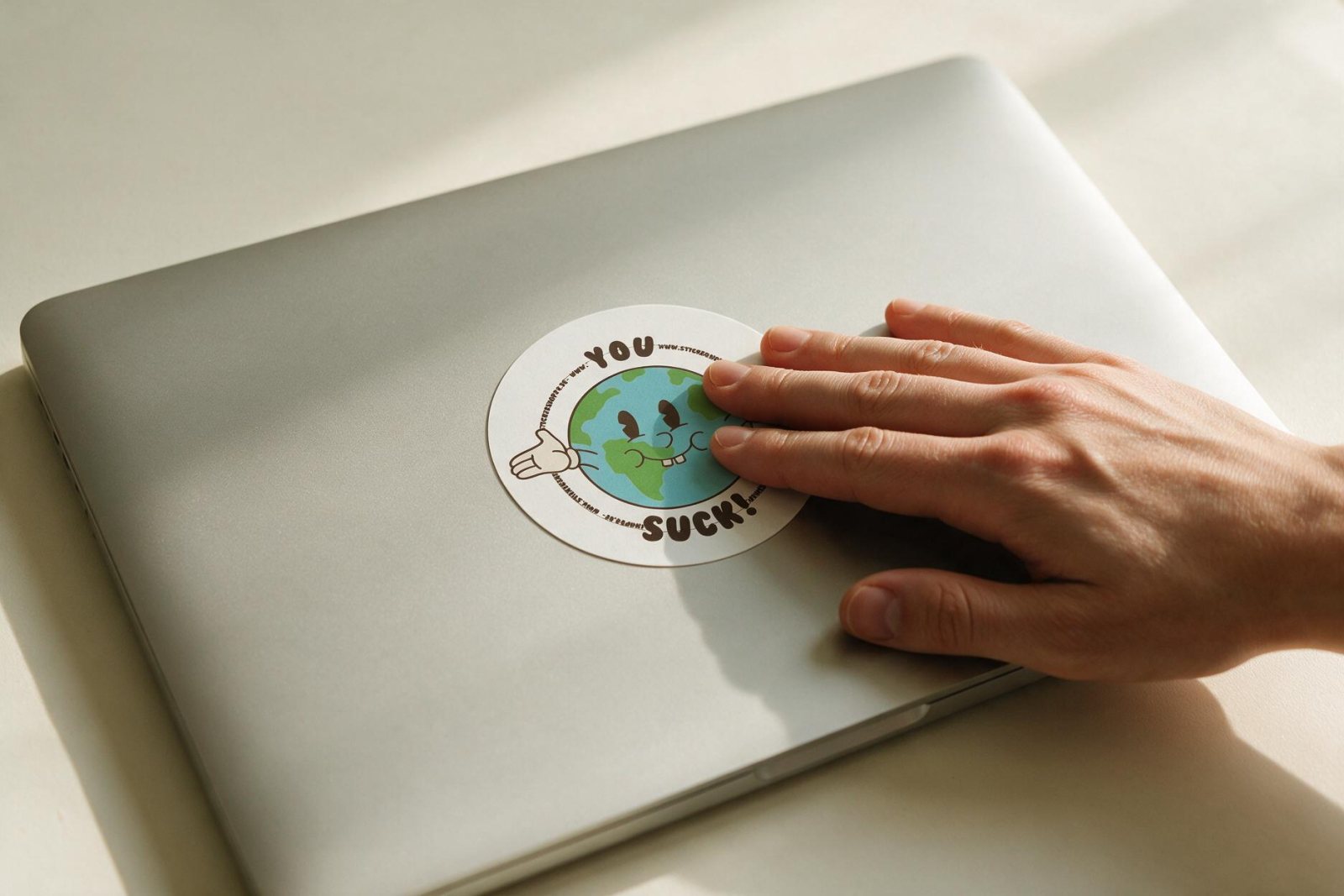 Step 3 — Press
Flip it up at the tape, peel off the backing paper, flip it back
down. Set it down in the middle and stroke outward with your
thumb in a cross pattern: up first, then down, then left, then
right.
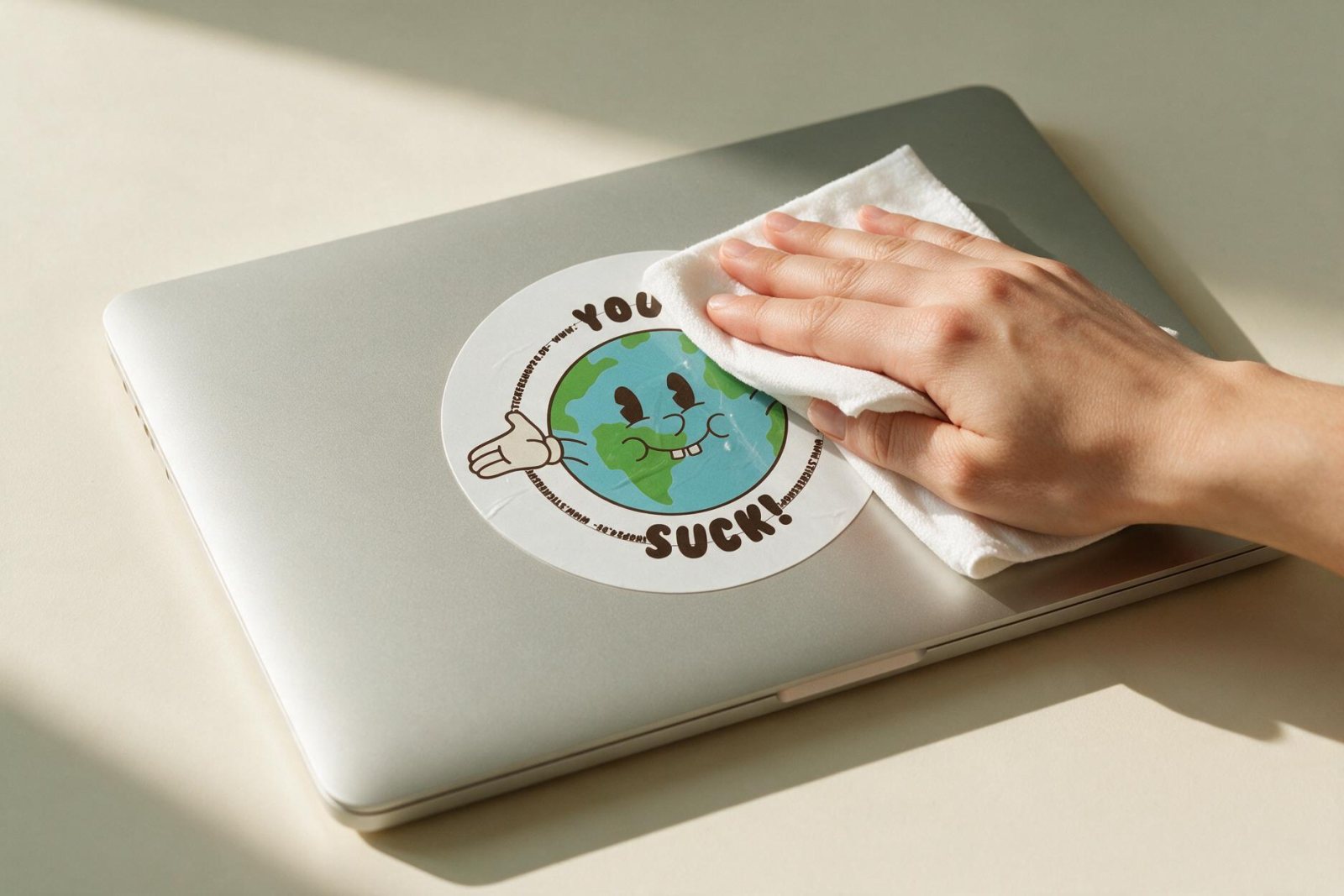 Step 4 — Go over the edge
Run your fingernail once around the whole rim. The edge is where
every future stress will attack — a jet of water, a brush, a
sleeve. If it's firm, nothing happens.
Step 1 in detail: clean means grease-free
You can get isopropanol at any pharmacy or hardware shop. It dissolves grease, evaporates without a trace, and leaves no film. That's exactly what makes it better than the three household alternatives people reach for instead:
| Product | Dissolves grease | Leaves no residue | What happens otherwise |
|---|---|---|---|
| Isopropanol 70% | yes | yes | Nothing. That's why we recommend it. |
| Washing-up liquid + water | yes | no | Surfactants leave a film behind, and the sticker slides |
| Glass cleaner | yes | no | Often contains care additives — which are exactly the problem |
| Water only | no | yes | Dust goes, grease stays. Half the job isn't enough. |
Why the middle goes first
If you start at one edge and sweep to the other, you push the air ahead of you — until it's trapped in a corner at the end and stays there. If you set down in the middle and stroke outward in a cross pattern, every air bubble gets the shortest possible route out.
If a small bubble does stay put: don't press it. Take a needle, prick it at the edge of the bubble and stroke the air toward the puncture. A hole at the edge is invisible; a pressed-flat bubble in the middle is forever.

The first 24 hours
The adhesive isn't done bonding once you've pressed it on. Full grip is only reached after 24 to 48 hours, depending on the surface and temperature. During that time:
- Don't wash it, don't leave it in the rain, no trip through the car wash
- Don't shift it afterward — the half-set adhesive tears
- Keep it above 10°C where possible; adhesive barely flows in the cold
Stick it on at 5°C and it holds worse right away — and you won't notice until two weeks later, when the corners start lifting.
 Laptop
 Car
 Outdoor
 School