EN
 DE
 Paul H.Print & Material
8 minutes
"Sticker" is an umbrella term for very different things. The one on a supermarket apple and the one on the rear window of a tradesman's van have nothing in common except the basic idea. This overview explains the three materials you'll actually run into — and which one you need for what.
The build-up is the same for all of them
No matter the price: a sticker always consists of a base material, a printed layer, adhesive, and backing paper. The differences show up in three places — the material of the top layer, the type of adhesive, and an optional protective laminate. Everything else is marketing.
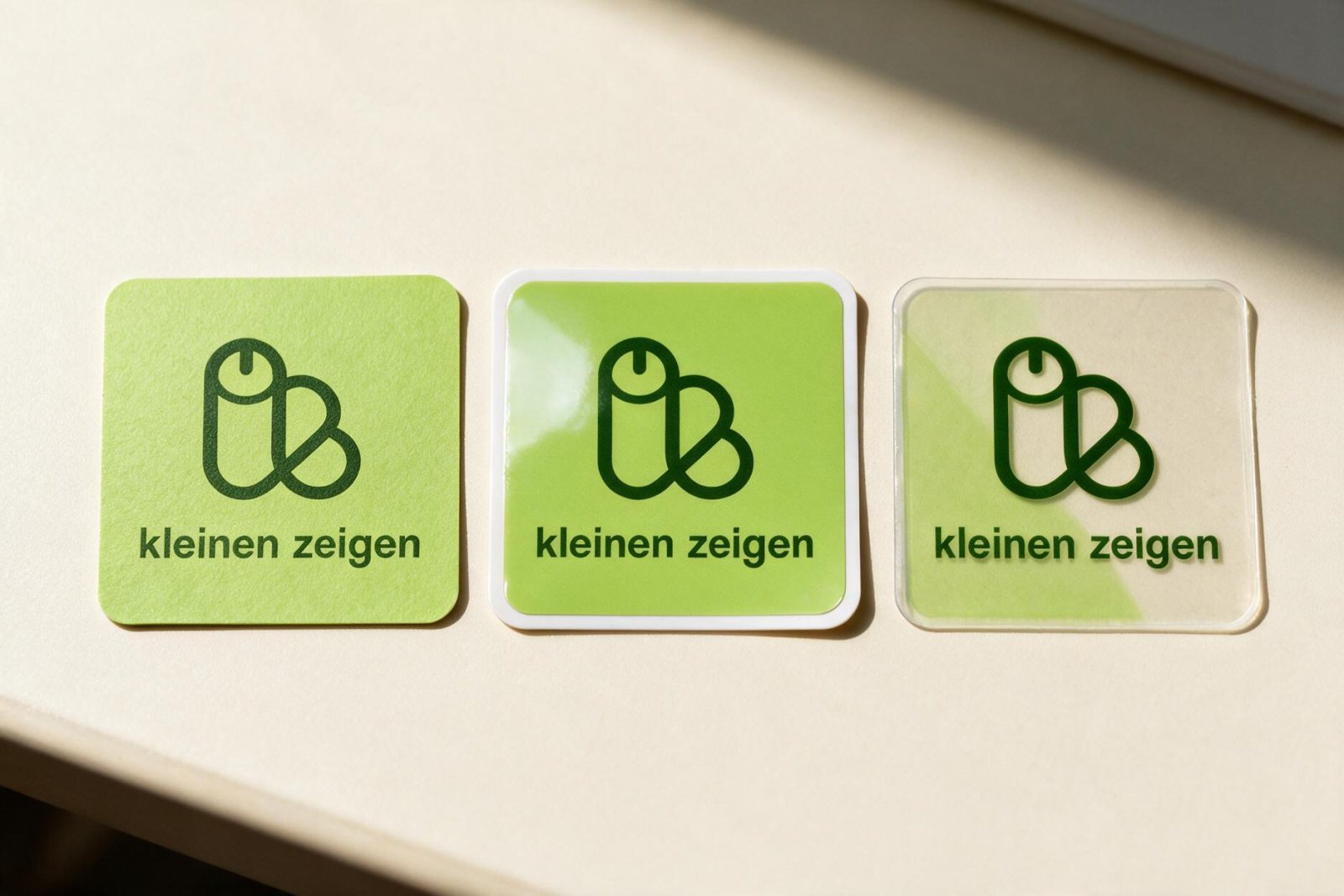
Paper
Paper stickers are what you find on fruit, on parcels, and on price tags. They're cheap to make, take printing ink well, and have a pleasantly matte surface. Their problem is water: even condensation is enough to make the fibres swell. After that the edge goes wavy and the design blotches.
On top of that, paper is a one-way bond. When you peel it, it tears into shreds because the adhesive is stronger than the fibre structure. For a label that's the point, for a sticker on a laptop it's annoying.
Vinyl
Vinyl (more precisely: flexible PVC) is what practically every long-lasting sticker is made of. It's elastic enough to follow gentle curves, waterproof, tear-resistant, and can be peeled off almost residue-free with a bit of heat. That's exactly what makes it the standard for laptops, bottles and cars.
Within vinyl, there are two grades worth knowing about:
- Calendered vinyl (the usual kind): stable, affordable, happy to stay wherever it was pressed on during application. Perfect for flat and gently curved surfaces.
- Cast vinyl: thinner, holds its shape better, follows even strong curves and grooves. Used for full vehicle wraps and noticeably more expensive.
For a sticker on a laptop lid or a rear windscreen, you don't need cast vinyl. For the curve of a motorcycle fairing, you do.
Transparent film
Transparent stickers look brilliant on glass — lettering looks like it's printed straight onto the pane. The catch is opacity: printing ink is translucent, not opaque. On a light background the design glows, on a dark one it nearly vanishes.
That's why transparent stickers work great on a window with daylight behind it, and don't work at all on a black laptop lid. If you want both, you need a white base layer underneath — and that costs an extra print pass.
Everything side by side
| Property | Paper | White vinyl | Transparent film |
|---|---|---|---|
| Waterproof | no | yes | yes |
| Suitable outdoors | no | yes | yes |
| Residue-free removal | no | yes | yes |
| Covers dark backgrounds | yes | yes | no |
| Follows curves | no | partly | partly |
| Price | low | medium | medium |

Matte or glossy
Mostly a matter of taste, with two practical side effects: glossy surfaces look more vivid and wipe clean more easily. Matte surfaces don't reflect, look more premium and show fingerprints less — but dirt and scratches stick to them more.
For laptops we'd recommend matte (no glare under office lighting), for outdoor surfaces glossy (water beads off better, dirt sticks less).
 All designs
 Car
 Laptop
 Outdoor